
I will embark on a writing escapade in November — the NaNoWriMo, an annual writing project that brings together amateur and professional writers from around the world, in an admittedly quasi-sane attempt to write 50,000 words in 30 days. Here is the explanation from the website:
“National Novel Writing Month is a fun, seat-of-your-pants approach to novel writing. Participants begin writing November 1. The goal is to write a 175-page (50,000-word) novel by midnight, November 30.
Valuing enthusiasm and perseverance over painstaking craft, NaNoWriMo is a novel-writing program for everyone who has thought fleetingly about writing a novel but has been scared away by the time and effort involved.
Because of the limited writing window, the ONLY thing that matters in NaNoWriMo is output. It’s all about quantity, not quality. The kamikaze approach forces you to lower your expectations, take risks, and write on the fly.
Make no mistake: You will be writing a lot of crap. And that’s a good thing. By forcing yourself to write so intensely, you are giving yourself permission to make mistakes. To forgo the endless tweaking and editing and just create. To build without tearing down.
As you spend November writing, you can draw comfort from the fact that, all around the world, other National Novel Writing Month participants are going through the same joys and sorrows of producing the Great Frantic Novel. Wrimos meet throughout the month to offer encouragement, commiseration, and—when the thing is done—the kind of raucous celebrations that tend to frighten animals and small children.
In 2007, we had over 100,000 participants. More than 15,000 of them crossed the 50k finish line by the midnight deadline, entering into the annals of NaNoWriMo superstardom forever. They started the month as auto mechanics, out-of-work actors, and middle school English teachers. They walked away novelists.
So, to recap:
What: Writing one 50,000-word novel from scratch in a month’s time.
Who: You! We can’t do this unless we have some other people trying it as well. Let’s write laughably awful yet lengthy prose together.
Why: The reasons are endless! To actively participate in one of our era’s most enchanting art forms! To write without having to obsess over quality. To be able to make obscure references to passages from our novels at parties. To be able to mock real novelists who dawdle on and on, taking far longer than 30 days to produce their work.
When: You can sign up anytime to add your name to the roster and browse the forums. Writing begins November 1. To be added to the official list of winners, you must reach the 50,000-word mark by November 30 at midnight. Once your novel has been verified by our web-based team of robotic word counters, the partying begins.”
So, there you have it, I am promised partying and general revelry by the end of the month. They don’t mention tears or hair-ripping, just a vague reference to “commiseration”. I am filled with questions and yes, doubts and fears, but am willing to give it my best shot.
Anyone care to join me?

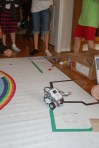 The state tournament for the FIRST Lego League Robotics program was this past weekend in Dayton, Ohio. I coached an elementary school team this past fall (rookie coach + first time team = probably not the ideal choice). I did not plan to be a Lego Robotics coach; I did not attend the back-to-school “information meeting”, which was probably my first mistake. I did not know it was the Coach Nomination Meeting. Had I been there, I could have provided an animated and persuasive argument for why I was NOT the person to take on a team, no matter how badly the school needed just one more parent volunteer coach. After all, I made it through a decade of legos strewn around the carpet of my home without ever developing the tiniest inkling to actually build something out of them myself. As it was, I sent my engineery husband instead. I promise you, this was the logical choice, given the two people involved: hmmm, let’s see… science, technology, math, engineering, team emphasis, coaching experience — he was perfect!
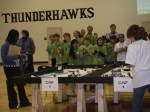 Because when it all came down to it, here’s the deal: the organization has an impressive mission, and one that I want to celebrate. The FIRST Lego League Robotics Program provides kids an alternative avenue to hear the cheers of a crowd. Of course, youth athletics are an outstanding, well-recognized way to learn teamwork, dedication and the payoff of hard work; but there are other alternatives for kids to learn equally valuable life skills, and this program is one of them. The vision expressed on the FIRST Lego League website from founder Dean Kamen — “To transform our culture by creating a world where science and technology are celebrated and where young people dream of becoming science and technology heroes” — says a lot in a world where sports heroes are repeatedly shown to be great athletes, but not necessarily great role models for kids. Any chance we have as parents to develop and challenge the whole child, whether through athletic or academic programs, is worth celebrating. Having experienced a gymnasium packed full of fans cheering loudly — about teamwork-based science! — it is an exciting scene to witness.
 I’m proud to have been a part of the whole thing. My team, Team G.E.E.K., did not qualify for the recent state tournament, but we sure had fun. (Not that that means that I am already volunteering for next year, because I am not ready to commit…) By the way, our G.E.E.K stood for Global Energy Engineering Krew. At first, the kids were not sure about being known as “geeks”, but they soon embraced the slogan that “geek is the new cool”. It’s OK to be smart and other kids can and will respect you for it.
 jane, candid